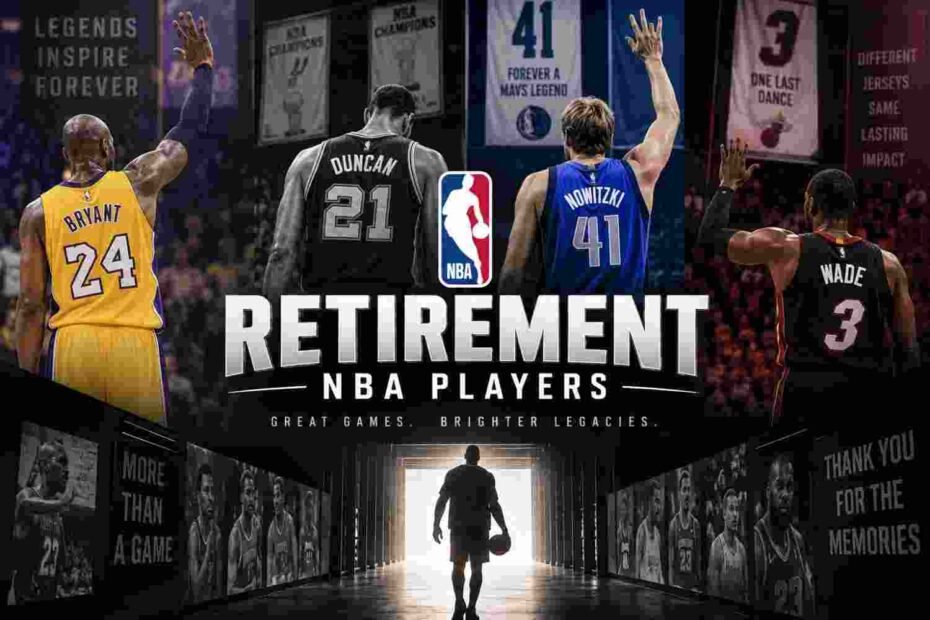
Professional athletes dedicate their youth to basketball, only to see their playing days end before thirty-five. Leaving the league without a clear financial safety net creates sudden identity friction and wealth pressure. Fortunately, modern union benefits, guaranteed pension funds, and strategic career programs empower retirement nba players to build lasting security, protect their health, and thrive long after the final buzzer.
What Age Do NBA Athletes Step Away from the Court?
The average career span in professional basketball lasts approximately 4.5 years. Most players transition out of the league around age 28, while elite stars often compete well into their late thirties.
Understanding when retirement nba players leave the court reveals a sharp contrast between superstar longevity and fringe roster turnover. Physical wear, nagging injuries, and intense draft competition accelerate this transition for most rostered athletes.
How Does the NBPA Pension Plan Protect Former Players?
The pension system stands as one of the most reliable financial safety nets in professional sports. Created through the Collective Bargaining Agreement negotiated by the National Basketball Players Association (NBPA), this plan protects athletes who complete at least three accredited seasons.
The union structure ensures retirement nba players gain guaranteed monthly income calculated by years of service. A vested three-year veteran can draw annual benefits starting at age 45, with total payouts increasing significantly if deferred until age 62. Ten-year veterans receive over $200,000 annually at full maturity.
What Health and Welfare Benefits Support Retired Athletes?
Post-career healthcare remains a essential priority for athletes recovering from decades of high-impact physical training. Joint replacement surgeries, spinal care, and cardiovascular tracking require continuous medical coverage long after active play ends.
Comprehensive health insurance covers retirement nba players after three credited service years. The league provides medical, dental, vision, and prescription drug coverage to qualified veterans through dedicated benefit trusts. Additionally, players receive tuition reimbursement grants if they choose to finish undergraduate degrees or complete executive certifications.
How Do Former Players Transition into Business and Investing?
Modern basketball stars no longer rely solely on legacy paychecks. Instead, former roster members use their earnings and personal media reach to establish active investment portfolios.
Many retirement nba players shift their competitive focus into commercial entrepreneurship, real estate holdings, and tech venture funds. Industry icons like Magic Johnson and Junior Bridgeman established multi-million-dollar corporate entities by purchasing franchise chains, bottling plants, and commercial property groups. Younger alumni follow similar models by backing early-stage technology startups and private equity funds.
Why Is Financial Literacy Critical for Modern Athletes?
Past accounts of sudden financial distress prompted both league officials and player unions to expand financial literacy programs. Active roster members now attend mandatory workshops on wealth preservation, tax management, and investment risk.
Targeted education helps retirement nba players avoid asset misallocation that impacted earlier generations. Qualified financial advisors guide players through tax-efficient withdrawal plans, estate planning trusts, and passive income generation.
What Role Does Media and Broadcasting Play After Retirement?
Court intelligence and athlete credibility transfer seamlessly into modern sports media. National networks and digital broadcasting channels continuously recruit articulate ex-players to analyze live games and produce original commentary.
Sports television networks frequently hire retirement nba players for studio analysis, sideline commentary, and sports podcasting networks. Prominent stars build lucrative media presence that pays competitive salaries while maintaining their presence across global basketball culture.
How Do Players Transition into Coaching and Front Office Roles?
A direct progression for basketball strategists involves team leadership and front-office operations. Former point guards and veteran leaders frequently move straight from active rosters to coaching positions.
Franchises hire retirement nba players for scouting operations, player development roles, and general manager offices. Their personal understanding of locker room culture and tactical play offers value to franchise ownership groups.
What Mental Health Challenges Impact Retired Professional Athletes?
Leaving competitive sports demands significant personal and psychological adjustment. Athletes lose their structured physical routine, locker room camaraderie, and public recognition almost immediately.
The psychological transition for retirement nba players involves discovering new purpose beyond athletic achievement. Mental health programs backed by NBA.com offer confidential therapy, career transition coaching, and alumni networks to assist former players.
How Does the Post-Career Income Plan Work?
Beyond the central pension fund, the CBA features a dedicated Post-Career Income Plan. This framework matches team contributions with player equity while drawing from league Basketball Related Income (BRI).
Deferred annuity structures provide retirement nba players with steady payments shortly after their final contract completes. This arrangement supplies income during the critical gap between professional play and official pension eligibility at age 45.
Overview of Benefits for Retirement NBA Players
The structured framework below outlines primary financial safety nets and educational programs provided to qualified league alumni.
| Benefit Category | Service Requirement | Primary Benefit Structure | Governing Body |
| Vested Pension | 3 Years of Service | Guaranteed monthly payouts starting at age 45 or 62 | NBPA Union Trust |
| Health Insurance | 3 Years of Service | Full medical, dental, prescription, and vision coverage | League Health Plan |
| Tuition Reimbursement | 1 Year of Service | Direct financial assistance for higher education | League Education Fund |
| 401(k) Contribution Match | Active Roster Status | Employer-matched retirement investment savings | U.S. Bureau of Labor Statistics / NBPA |
Key Lessons Current Athletes Can Learn from Retired Stars
Building financial security after basketball requires strategic decisions made while earning active contract paychecks. Established veterans offer essential takeaways for younger players:
- Diversify investments early: Distribute capital across index funds, real estate assets, and reliable equity holdings.
- Expand corporate connections: Build relationships with business sponsors, league partners, and executive leaders during active playing years.
- Utilize educational grants: Apply union tuition support toward earning business degrees or specialized credentials.
- Prioritize wellness: Develop interests outside sports to prepare for life after active competition.
Younger stars study how successful retirement nba players manage commercial ventures. Proactive career planning transforms short-term sports income into permanent generational security.
Frequently Asked Questions
At what age do most NBA players retire from professional basketball?
Most retirement nba players finish their active playing careers between ages 28 and 34. While superstar players often compete past age 35, the average overall career lasts roughly 4.5 years.
How many years must an NBA player play to qualify for a pension?
A player must complete three accredited seasons on an active or inactive league roster to qualify for the vested pension plan. Reaching three years of service locks in lifetime retirement payments.
How much money do former players receive from their pension?
Monthly pension benefits depend on credited years of service and the age when payments begin. A three-year veteran earns roughly $57,000 annually at age 62, while a ten-year veteran receives over $215,000 per year.
Do retirement NBA players get lifetime healthcare coverage?
Yes, retirement nba players who earn at least three credited service years receive comprehensive health, dental, and prescription coverage through the union health plan.
Can retired players go back to college using league funding?
Yes, qualified former players can access tuition reimbursement programs funded by the league and union to pursue undergraduate degrees or specialized trade credentials.
What second careers are most popular among ex-basketball players?
Former players regularly transition into sports broadcasting, commercial real estate, venture capital investing, head coaching, and corporate franchise ownership.
Building Your Post-Game Security Strategy
Transitioning out of elite athletic competition requires disciplined financial planning, health maintenance, and structured business focus. Backed by strong union benefits, retirement nba players continue establishing valuable business legacies beyond the court.
Start designing your career transition plan today by reviewing financial advisory resources, union education grants, and corporate networking platforms. Taking charge of your secondary career pathway ensures independence and long-term financial stability.